The Environment Agency’s recently published list of high-priority waste sites in England provides a stark reminder of the continuing scale of waste crime and environmental non-compliance across the sector.
The numbers are eye-watering.
Based on the published data, the sites collectively account for approximately 1.87 million tonnes of waste. Using the current landfill tax rate of £130.75 per tonne, that equates to an estimated £245 million in landfill tax potentially avoided.
That is not simply a regulatory issue — it is a significant economic issue.
£245 million could fund a substantial increase in environmental enforcement capability, additional investigators, improved intelligence gathering, and greater oversight of high-risk operators. At a time when regulators continue to face resource pressures, the scale of lost tax revenue raises important questions about whether the current system is adequately equipped to respond.
But another question also emerges from the data:
Are all “high-priority” sites really equal?
The published list includes a very broad range of sites, from locations containing relatively small quantities of waste through to sites containing hundreds of thousands of tonnes.
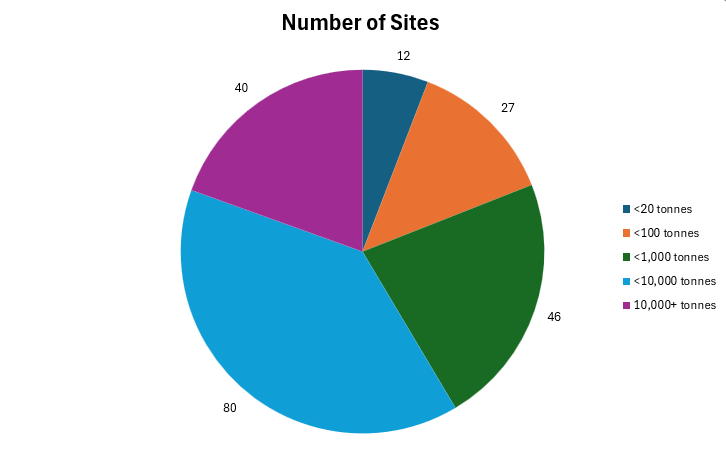
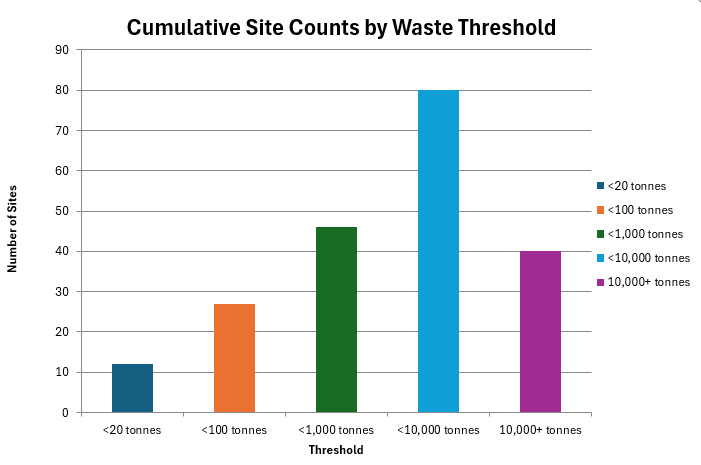
Analysis of the published figures shows:
- 16 sites contain less than 20 tonnes of waste — effectively around a single lorry load.
- 27 sites contain less than 100 tonnes.
- 46 sites contain less than 1,000 tonnes.
- 80 sites contain less than 10,000 tonnes.
At the other end of the scale, some sites contain extraordinary volumes of waste, with the largest reportedly holding around 281,000 tonnes.
This inevitably raises an important policy and regulatory question:
Does it make sense to classify all these sites under the same “high-priority” banner?
A site containing one tonne of waste clearly presents a very different environmental risk, financial impact, and remediation challenge compared with a site containing hundreds of thousands of tonnes.
That is not to minimise smaller-scale non-compliance. Any illegal waste activity undermines legitimate operators and damages confidence in the sector. However, where regulatory resources are finite, proportionality matters.
Lumping together minor sites and massive waste accumulations under a single category risks obscuring the true scale of the most serious cases. It may also make it more difficult for stakeholders, policymakers, and the public to understand where the greatest environmental and financial risks actually sit.
A More Targeted Approach?
The data arguably supports a more tiered system of classification, distinguishing between:
- Small-scale compliance issues
- Moderate-risk accumulations
- Major strategic waste crime sites
Such an approach could help focus enforcement, funding, and remediation efforts where they are likely to have the greatest environmental impact.
The publication of the data is undoubtedly a positive step for transparency. But transparency should also prompt debate about how priorities are defined — and whether current classifications genuinely reflect risk, harm, and public cost.
Because when nearly a quarter of a billion pounds in landfill tax is potentially being avoided, the conversation cannot simply be about waste volumes alone.